
MVA Explained
Understanding Mosaic Variegated Aneuploidy (MVA)
Mosaic Variegated Aneuploidy (MVA) Syndrome is an ultra-rare genetic condition that affects fewer than 50 people worldwide. It’s a lifelong diagnosis that can lead to complex medical challenges, including developmental delays, growth issues, and an increased risk of childhood and adult cancers.
Until recently, there was no dedicated research, no treatment guidance, and no specialist support for people living with MVA. The MVA Society was founded to change that.
What Is MVA?
MVA is a genetic condition that affects how a person’s cells divide and grow. In people with MVA, the body produces a high number of cells with the wrong number of chromosomes - a state called aneuploidy.
These abnormal cells can appear in many different parts of the body, which is why symptoms vary from person to person. The term mosaic refers to the mix of normal and abnormal cells, and variegated means the types of chromosomal errors are diverse.
What it means
Each person’s experience of MVA is different - but the risks are real, and the current lack of treatment options makes research and advocacy more important than ever. The effects of MVA can be wide-ranging and lifelong. It can cause:

Delays in physical growth and development

Distinct facial features or body differences

Low muscle tone

Learning disabilities

A significantly increased risk of developing certain cancers
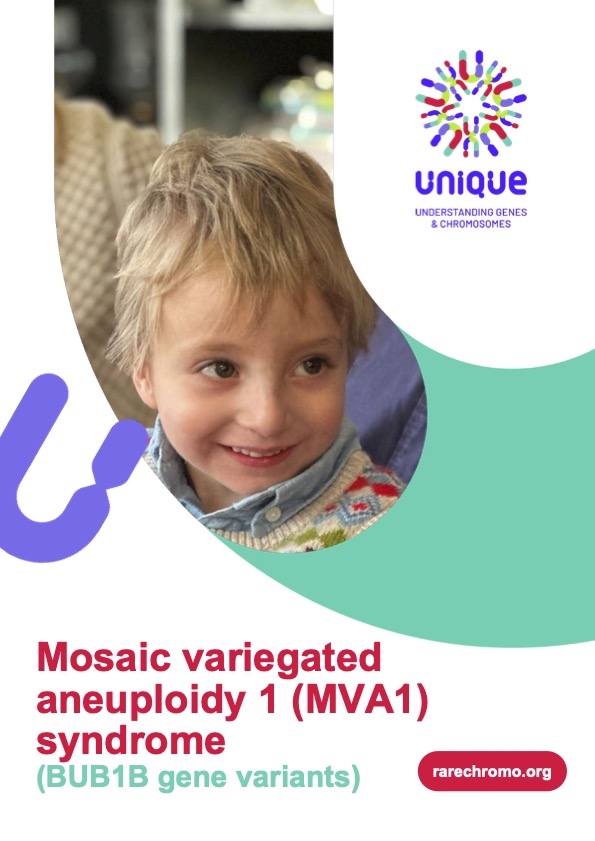
MVA Syndrome - BUB1B gene variants explained
This guide is designed to help families and healthcare professionals looking after people with MVA1 syndrome caused by variants in the BUB1B gene. It contains information about the cause, the ways in which it can affect people and suggestions about the help and management that can benefit people with this condition.
How Rare Is MVA?
MVA is so rare that most doctors will never see a case in their entire career. Globally, fewer than 50 individuals are known to have it.
This extreme rarity means:
- Very little research has been done
- Families often receive little or no guidance at diagnosis
- There are no established treatment, pathways or standard care protocols
That’s where the MVA Society steps in - connecting families to leading medical experts, providing advocacy and information, and sponsoring the first-ever targeted research into potential treatments.
We’re here to change the experience of living with MVA, so people no longer feel isolated and out of options. Instead, we want our entire community to have access to informed care, promising treatment pathways, and one day, a cure.
If you or someone you love is affected by MVA, you're not alone.
Learn more about MVA
Read more information on Mosaic Variegated Aneuploidy